
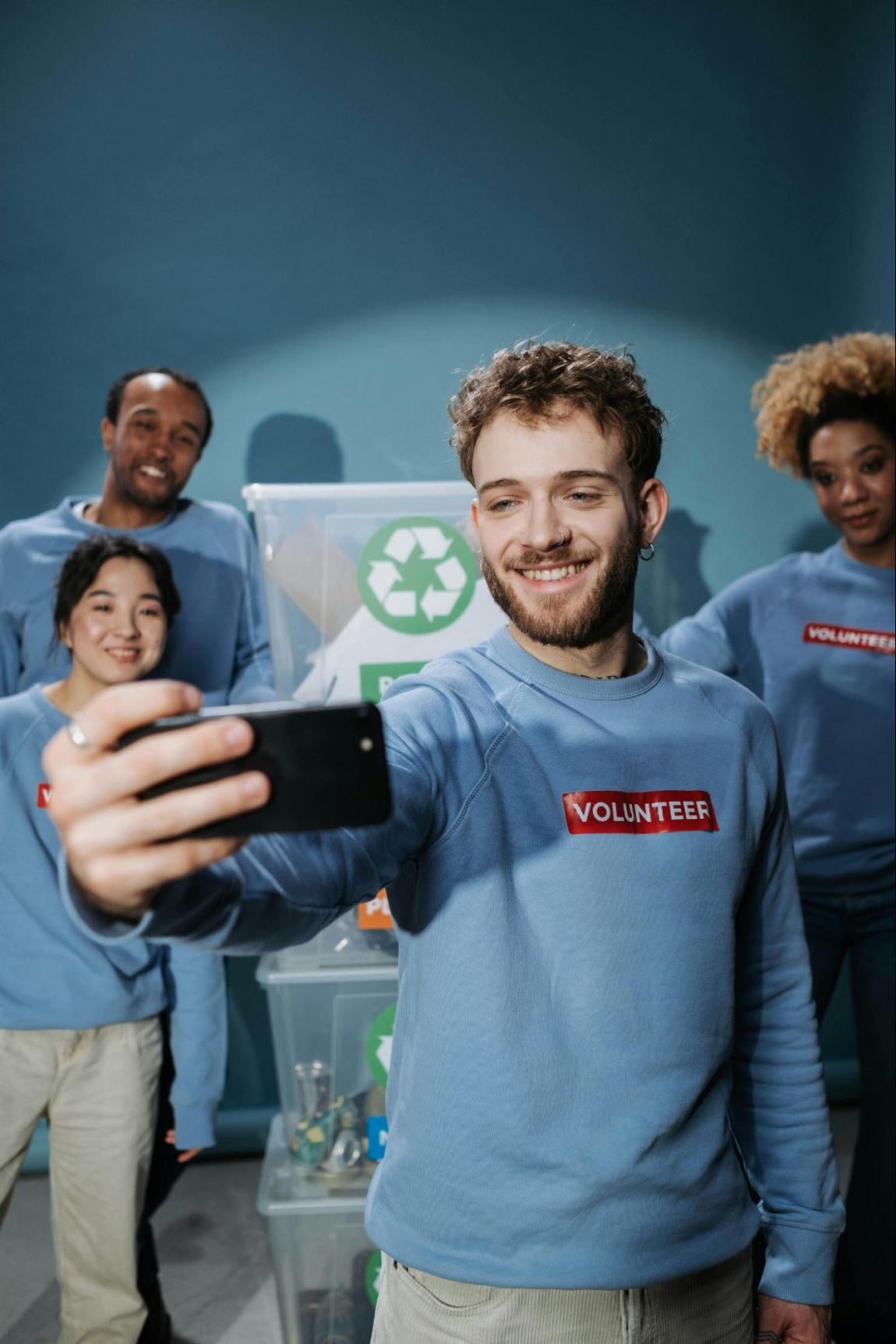
A recent wave of research is reinforcing something nonprofit professionals have long suspected.
Today’s volunteers—especially younger ones—are deeply motivated by a desire to make a difference. In fact, about 8 in 10 people ages 12 to 25 report participating in some form of service, often through flexible, everyday acts like organizing donation drives or helping others in their communities.
That’s an encouraging signal. But it also presents an opportunity—and a challenge. Many of these individuals see themselves as helpers, advocates, and community builders…yet they may not automatically see themselves as financial supporters.
The good news? Volunteers are one of your most promising pipelines for future donors.
Start with what they already believe
Volunteers already care. They’ve raised their hands, given their time, and connected personally with your mission. That’s a powerful foundation.
Research shows that younger volunteers are especially motivated by impact, connection, and purpose. They want to know that what they’re doing matters—and they want to feel part of something meaningful.
That mindset translates naturally into charitable giving when nurtured the right way.
Make the connection between time and treasure
One of the most effective strategies is also one of the simplest: Help volunteers see that financial support is just another way to make a difference.
Many young people are already comfortable with this idea. Surveys show that donating goods or organizing fundraising efforts are among the most common forms of service for younger generations. In other words, they already understand that money—and mobilizing money—can drive impact.
Your role is to connect the dots:
- “You’ve seen the impact firsthand.”
- “You know what it takes to deliver this work.”
- “Here’s how a small financial gift can extend that impact even further.”
When positioned this way, giving feels like a natural extension of volunteering—not a separate ask.
Start small—and make it easy
For many volunteers, especially students and early-career professionals, capacity is limited. That’s okay.
Introduce giving in accessible ways:
- Modest annual gifts
- Monthly recurring donations
- Peer-to-peer fundraising campaigns
- Giving tied to volunteer milestones
The goal is not the size of the gift—it’s the habit. A volunteer who becomes a first-time donor, even at a small level, is far more likely to give again.
Grow with them over time
One of the most important insights from recent volunteer trends is that engagement evolves. Commitments shift as young people move from school to careers to family life.
Your strategy should evolve with them.
As volunteers grow in their careers and financial capacity, so too can their philanthropy:
- Annual donors can become mid-level supporters
- Engaged donors can be introduced to major gift opportunities
- Longtime supporters can begin thinking about legacy gifts
- Committed champions can help build endowment funds for long-term impact
This is a long game—and volunteers are uniquely positioned to travel that journey with you.
Offer leadership and ownership
Another key takeaway from the research is that young volunteers want more than participation—they want ownership. Many report higher engagement when they can help plan, lead, or shape activities.
This is a powerful bridge to philanthropy.
Consider:
- Inviting volunteers to help lead fundraising campaigns
- Encouraging them to organize giving initiatives
- Creating ambassador or advisory roles
When volunteers take ownership of outcomes, they become more invested—not just in the work, but in sustaining it financially.
Build a culture of lifelong philanthropy
Ultimately, the goal is not just to convert volunteers into donors—it’s to cultivate lifelong supporters of your mission.
Volunteers who give are more likely to:
- Stay engaged longer
- Increase their support over time
- Advocate for your organization within their networks
And perhaps most importantly, they carry your mission forward across generations.
The surge in volunteerism—especially among Gen Z and Gen Alpha—is more than a trend. It’s an invitation. By meeting volunteers where they are, starting small, and growing with them over time, nonprofits can build a powerful pipeline from service to sustained financial support.
A note about politics
Many people get involved in a wide range of volunteer activities, including politics, to make meaningful community change. Now is a good time to refresh your recollection about the parameters within which your organization can get involved. We love this article for a thoughtful overview. Your board might find it useful as well!
Because today’s volunteer is very often tomorrow’s donor—and, with the right engagement, tomorrow’s major gift or legacy supporter. As always, the community foundation is here for you! Please reach out anytime.